Audio-Technica AT4040
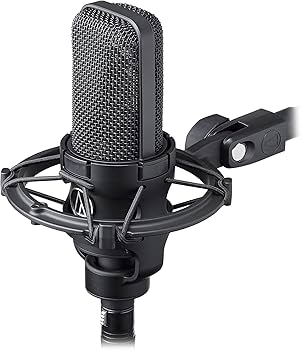
The scent of stale coffee still clung to the air in Studio B, even after I’d aired it out all morning. Another session, another band fighting to sound… less digital. They’d brought in their own mics this time, a motley crew. Among them, a gleaming Audio-Technica AT4040. My eyebrows arched – a solid workhorse, but a bit of a cliché these days, right?
Right and wrong, it turned out.
That “externally polarized (DC bias)” bit in the specs? That’s where the magic, or at least the groundwork, really lies. This isn’t a transformer-less, shout-at-a-brick-wall kind of condenser. It’s got a pleasing warmth, the kind that smooths out harsh transients and gives a vocal a welcome, almost pre-EQ’d, polish. The lead singer, a guy with a voice like gravel gargling honey, was particularly happy.
We put it up against their other mic, a newer model from a competitor, you know, the one everyone raves about. The other one, despite its higher spec sheet numbers, sounded… thin. Clinical. Sterile. The AT4040, though? It just worked. That large diaphragm, tensioned just so, captured the nuances of his performance beautifully.
One thing: It’s a bit sensitive, especially on sibilants. S’s, T’s, the usual suspects. A good pop filter is essential. Honestly, that’s standard procedure in my book anyway, so it wasn’t even a speed bump, just a quick adjustment. A little careful mic placement, a decent de-esser in post, and boom — problem solved.
But here’s the thing: It’s not the be-all and end-all mic for every vocalist, particularly those with naturally bright voices, which might benefit from a more neutral or even a slightly brighter response. However, the AT4040 is perfect for voices that need a little love, and can tame a harsh mix.
So, if you’re a recording engineer looking for a reliable, versatile, and affordable microphone to have on hand for vocalists, or for those tricky acoustic guitar or string instrument sessions? You could do a lot worse. Get one. You won’t regret it.